Camper FAQ
Four Wheel Camper · Trucks · Build Details
What model Four Wheel Camper do you own?
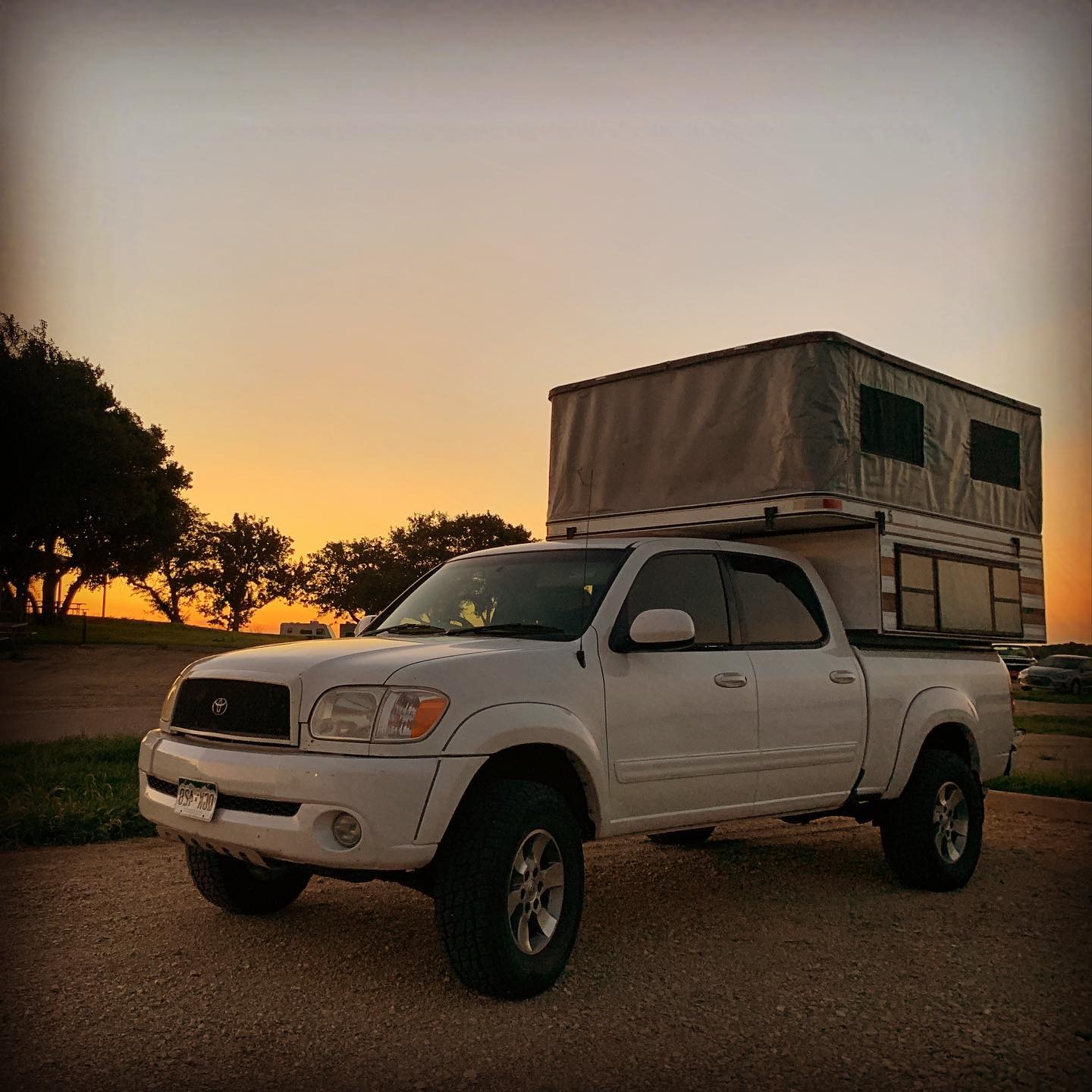
I have a Four Wheel Camper from the 1980s. I believe my camper is a 1984 to be specific, but when I purchased the camper there were no identifying marks to be sure of the year. The folks at Four Wheel Camper suggested the camper was an 82 or 84. My Four Wheel Camper specifically is the seven foot Fleet model, made for 80s import trucks like the old Toyotas (pre T-100).
Where do you camp in your Four Wheel Camper?
I live in the Front Range of Colorado and do most of my camping around the Front Range and the I-70 corridor. I almost always go dispersed/off-grid camping on National Forest or Bureau of Land Management (BLM) land. I have gone as far North as Montana and as far East as the Atlantic Ocean.
How can I support your YouTube channel?
The best way is by sharing my videos on social media with like-minded folks. Like, comment, and subscribe to encourage more distribution in the YouTube algorithms. You can also support directly by picking up a sticker or using my Amazon affiliate links.
Where did you buy part XX?
I keep a comprehensive list of every part and tool I used in the build on a public Google Sheet.
Do you have any write-ups of the build?
I started the camper project in 2015 but did not start making videos until the end of 2016, so there are about 1.5 years of camper projects that have little to no video. However during that time I did keep a comprehensive build report on Wander the West. It's the most viewed build report on the site.
How long is your Four Wheel Camper?
My Four Wheel Camper is a mid-80s Fleet model. This model was seven feet long to fit old import trucks. It fits well in both a 2nd Gen Toyota Tacoma (6 ft bed) and a 1st Gen Toyota Tundra (6.5 ft bed). With both trucks the camper hangs off the bed about 6–12 inches. I leave the tailgate on to support the overhang.
How is the camper attached to the Toyota Tacoma?
The 2nd and 3rd Gen Tacoma have a composite (non-metal) bed, so you cannot drill holes. Four Wheel Camper makes special mounting bars that mate with the mounting bolts in the truck bed. The D-rings in the stock bed are not designed to support the camper. I purchased my bed tie-down bars used from the local Four Wheel Camper dealer.
How is the camper attached to the Toyota Tundra?
The 1st Gen Tundra has a metal bed, so you can drill holes for your mounting locations. The holes are used to install cast D-rings and should be reinforced with big aluminum plates. Four Wheel Camper sells a mounting kit for this. The location of the mounting points is specific as the angle the turnbuckles make is important.
Where to buy mounting hardware for the Tacoma?
Four Wheel Campers sells the mounting hardware. The kit consists of purpose-built large metal bars that interface with the existing bed bolts. I highly recommend you use their hardware rather than make your own. Reach out to Four Wheel Campers.
Where to buy mounting hardware for the Tundra?
Four Wheel Campers sells the mounting hardware — the kit consists of D-rings, backing plates, and other pieces. I would highly suggest you use their hardware rather than make your own. Reach out to Four Wheel Campers.
What lift do you have on the Toyota Tacoma?
I had a 2009 Access Cab Tacoma, 4-cylinder manual. I installed 1-inch riser blocks and Firestone Ride Rite Airbags. I went with airbags for adjustability since I thought I would take the camper on and off a lot. In hindsight, I rarely took it off and wish I had gone with a new leaf pack instead. The airbags are cost-effective if you're tight on cash.
What lift do you have on the Toyota Tundra?
My 2005 Double Cab Tundra came with bigger tires, wheel spacers, riser blocks, and air bags. This style lift is adequate but not ideal for the camper. One air bag leaks and needs refilling about once a week — I should really replace it. I run the bags at 60 psi with the camper. The stance is awesome but I wish I had proper springs and leaf packs.
How does the Toyota Tacoma handle the camper?
The 4-cylinder Tacoma is really a bit small for the camper but it worked. When the camper was just a stripped-down shell, the truck handled it fine. Once fully built out and loaded with water and propane, the 4-cylinder struggled. Hills were third gear, off-road steeps needed a run-up, and gas mileage was 10–12 mpg. Once I upgraded to the Tundra it was night and day.
How did you build the pop-up canvas material?
Sewing the pop-up material is one of my favorite projects of the entire rebuild. I had never done any significant sewing prior to this project. It was a major endeavor and did not come out perfect, but it works well. The material is actually vinyl-coated polyester, not canvas. I have a three-part video series about making the pop-up — check out Part 1.
Can you share drawings and dimensions for the side panels?
I took extensive measurements and am happy to share. Take all drawings with a grain of salt — I had to make many adjustments on the fly. Use them as an inspirational guide, not a map. The drawings are on my build page on Wander the West.
Where to buy the canvas material for the pop-up?
The material is vinyl-coated polyester (what modern campers use too). I got mine from MyTarp.com. I went with the 22oz weight but in hindsight would have gone with 18oz — my canvas is a bit bulky when dropping the top, but not impossible to handle.
How is the DIY sewn canvas holding up?
After a few years of use, the canvas is holding up wonderfully. I've developed just a few holes where the roof and body pinch when putting the top down — that's an alignment issue, not a canvas issue. In heavy rain with heavy wind, a bit of rain seeps through the main lower seam, but this is minor and rare. Overall the camper is holding up great.
Where do you store your skis in the camper?
I made a "basement" for my camper with large drawers that accommodate my skis. For my Tundra, I needed to raise the camper slightly to fit the bed, so I turned that space into a drawer system. Two drawers that each fit a pair of skis and poles. The concept is spot on even if the execution isn't perfect — the drawers stick a lot. If you're an avid skier with a Four Wheel Camper, I'd highly suggest the basement drawer system.
How do you charge your laptop on the road?
I use a power inverter that plugs into a cigarette lighter or directly to the house battery. It takes 12V DC power and converts it to 120V AC. They're not the most efficient way to charge a laptop (DC→AC→DC is inherently lossy) and the fans can be loud, but they work well. Start with a cheap one under $50, then upgrade to a quieter, more powerful unit if you find yourself using it a lot.
Have a different question? Email tim@tgmorrissey.com